

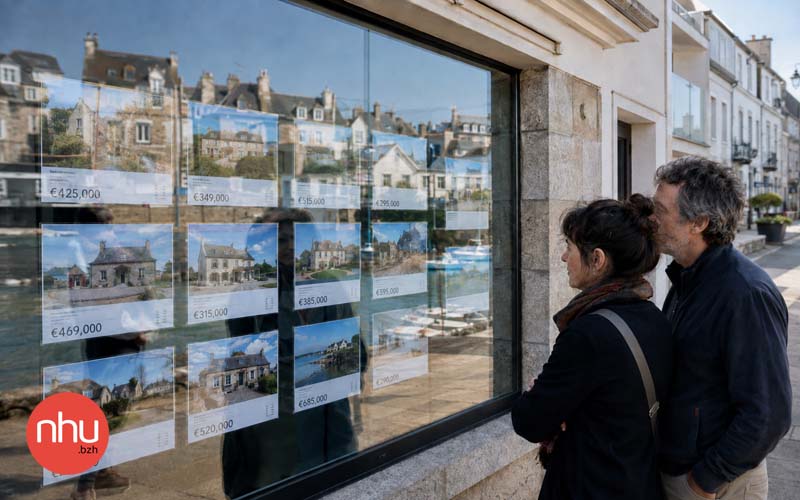
Within the space of just a few days, two major English-language newspapers have described two apparently contradictory versions of Brittany tourism.
The New York Times invited its American readers to discover the Emerald Coast: its seascapes, dramatic tides, oysters, Sant Maloù and a Brittany presented as an appealing alternative to the overheated Mediterranean. A few days later, the British daily The Times told a very different story. In southern Finistère, three cars registered in the Paris region were vandalised and daubed with messages hostile to tourists. Beyond this reprehensible incident, the newspaper focused mainly on soaring property prices, second homes and the growing difficulty local people face in finding somewhere to live in some Breton communities.
Two newspapers. Two perspectives. Two Brittanys? Not really. Four days apart, these articles may simply be telling two chapters of the same story. Brittany is becoming desirable. Perhaps increasingly so. That is excellent news — until the success of a place where so many people want to spend their holidays begins to make life harder for those who live there all year round.
Why is Brittany becoming so attractive?
For British or American readers, part of the answer is immediately obvious. Brittany has thousands of kilometres of coastline, beaches, islands, ports, remarkable architectural heritage, a highly distinctive cuisine and a culture of its own. It is easy to reach from across Europe and has direct sea links with Britain and Ireland. Above all, it possesses something that may become increasingly valuable in the years ahead: a relatively mild oceanic climate. This gives Brittany tourism a distinctive advantage as European summers grow hotter.
For decades, European summer tourism looked south. Spain, Italy, Greece, Portugal and the French Riviera almost naturally embodied the promise of sunshine. But what happens when the sunshine itself sometimes becomes a problem? The rise of “coolcations” – holidays chosen in cooler destinations – is now significant enough to feature in major international media.
Nor is The New York Times alone in turning its attention towards Brittany. On 21 August, The Times itself included Cancale / Kankaven among seven cooler European seaside destinations to consider for next summer. The British newspaper argued that longer and more intense summer heat in southern Europe could gradually push more families towards northern coastlines.
A similar shift is already visible on the Côte d’Opale. According to The Times, British visitor numbers there rose by 53% during part of July, while travellers from southern France are also seeking more bearable temperatures. In other words, Brittany no longer even needs to promote itself as a milder summer destination. Foreign media are beginning to do it on Brittany’s behalf.
Being desirable is good news – up to a point
It would be absurd to portray tourism’s appeal as a threat in itself. Tourism supports hotels, campsites, restaurants, shops, cultural venues and many seasonal jobs. It helps maintain economic activity in communities that might otherwise struggle to remain as vibrant. International visitors bring something else too: openness. Brittany tourism therefore supports both employment and international visibility.
Scottish, Irish, German, Dutch, French, Belgian and American visitors – alongside travellers from many other countries – discover a Brittany that is not necessarily limited to the image France projects of it. They encounter its heritage, flag, languages, food and sometimes its special relationship with the other Celtic nations. An attractive Brittany can therefore make its presence felt internationally. The problem begins elsewhere. It begins when a wonderful place in which to spend two weeks on holiday gradually becomes too expensive for twelve months of everyday life. That is precisely where tourism and housing begin to collide.
When one person’s holiday home becomes another’s housing problem
A second home is not inherently a problem. Many have belonged to Breton families for generations. Their owners maintain houses that might otherwise have remained empty, and they spend money locally. Yet a high concentration of second homes can fundamentally change a community. The effects are especially visible along the coast. When second homes and short-term holiday lets account for a very large share of the housing stock, the consequences go far beyond tourism.
Prices rise. Fewer homes remain available throughout the year. Working people must move farther from their jobs. Young adults who grew up in a community can no longer afford to buy there. Some villages are lively in July and August, only to face rows of closed shutters in winter. This is the mechanism The Times sought to explain behind the vandalism in Finistère. The newspaper also noted that Sant Maloù has capped short-term rentals at 12.5% of homes in its historic centre.
The words “tourists go home” are therefore only the spectacular – and very marginal – expression of a far more serious question. Who can still make a permanent home in the places that have become most desirable? This question is by no means unique to Brittany. Across the Channel, our Welsh and Cornish neighbours and cousins already know it very well.
What Brittany tourism can learn from Cornwall and Wales / Cymru
The Breton debate becomes particularly revealing when we look west. It immediately stops being a crude dispute between Bretons and Parisians. In Cornwall and parts of Wales / Cymru, the pattern is strikingly similar. Spectacular landscapes attract visitors. Tourism becomes a major part of the local economy. Holiday homes multiply. Property prices increase. Local incomes do not necessarily keep pace.
Some communities then face a cruel paradox: their tourism success helps make their own villages unaffordable to part of the local population. The figures published in Wales / Cymru are sometimes remarkable. Nation.Cymru reported that in Aberdyfi, within Eryri National Park, 45% of homes were second homes or holiday lets. In Beddgelert, the proportion reached 34.4%. Since June 2025, planning rules have allowed the park authorities greater control over the conversion of primary homes into second homes or holiday accommodation.
In the small coastal village of Aberdaron, where an affordable housing project has recently been considered, only 2% of residents would be able to buy a home at local market prices, according to figures reported by Nation.Cymru. Cornwall faces the same phenomenon. Census data covered by Nation.Cymru placed Padstow and St Issey among the areas with the highest concentrations of holiday accommodation in England and Wales / Cymru.
Wales / Cymru also has another concern: its language. When permanent residents leave Welsh-speaking communities because they cannot afford to live there, housing also becomes a cultural issue. Welsh campaigners explicitly connect the second-home crisis, the departure of local people and the weakening of Cymraeg as a community language. Brittany, Cornwall and Wales: three Celtic nations, each with a different situation. Yet the same question is emerging along their Atlantic coasts: how can they benefit from tourism without allowing it gradually to transform the very communities visitors came to experience?
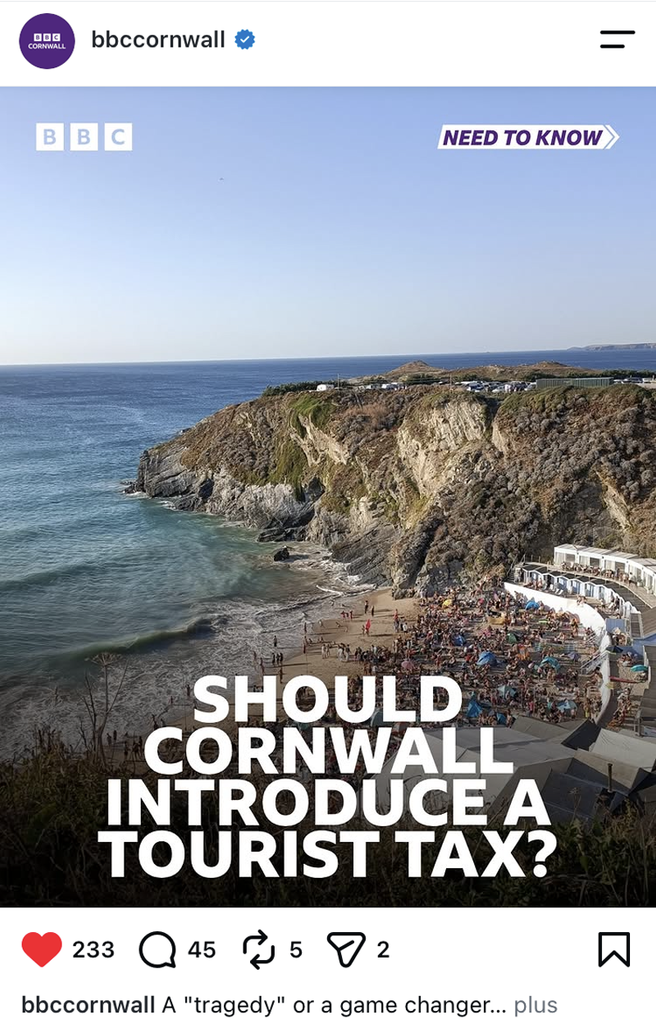
“Parisians go home” is the wrong story
This is where we must return to The Times report. Three cars were vandalised in Plobannalec Lesconil / Pornaleg Leskonil. The acts were reprehensible and obviously represent neither the community nor Brittany. Yet one detail reported by the British newspaper makes the episode almost absurd. The owners of the three Paris-registered vehicles were not Parisian tourists.
They were people from the area who had moved to the Paris region. It would be difficult to find a clearer illustration of the limits of scapegoating. The issue does not pit Bretons against Parisians — although tempers can occasionally suggest otherwise. Nor does it pit Bretons against tourists, British visitors or second-home owners as a whole.
The real tension lies elsewhere: between the needs of a permanent population and a housing market that increasingly serves external demand backed, in some cases, by greater purchasing power. Wales / Cymru encounters exactly the same simplifications. In 2025, Nation.Cymru responded to a Daily Mail article that framed tensions over Welsh second homes as a sensational story of hostility towards English people. Behind that identity-based narrative lay the same issues of housing, taxation, permanent communities and the survival of the Welsh language. Identifying an outsider to blame is easy. Building a balanced tourism and housing model is much harder.
How climate change could reshape Brittany tourism
This is where the two newspaper articles published just days apart reveal their full significance. The New York Times shows a desirable Brittany. The Times shows what may happen when it becomes too desirable. Climate change could accelerate the transition from one to the other. If Mediterranean summers experience more frequent episodes of extreme heat, Atlantic and northern European destinations could gain a tourism value they did not previously possess to the same degree. The future of Brittany tourism will increasingly depend on how this new demand is managed.
That does not mean millions of Europeans will suddenly abandon the Mediterranean for Brittany. But the early signals deserve attention. The Emerald Coast in northern Brittany is already welcoming more visitors in search of cooler weather. Cancale / Kankaven now appears in British recommendations for milder summer destinations. The New York Times has introduced the Emerald Coast to a worldwide readership.
What happens if “cool Brittany” gradually becomes a tourism slogan in foreign capitals — London, Brussels, Paris, Amsterdam or New York? First, more visitors. Then perhaps more second-home buyers. In the longer term, Brittany may also become more attractive to people seeking not just a holiday destination, but somewhere to live. Climate change could therefore produce a paradoxical consequence for Brittany. Its relative advantage — an oceanic climate — could become a powerful accelerator of property and population pressure.
How can Brittany remain attractive without becoming unliveable?
That is ultimately the only question worth asking. Does Brittany need fewer tourists? Should foreign buyers be prevented from purchasing homes? Calls for a resident status are becoming more frequent. Should Brittany become a protected sanctuary closed to those who wish to come? The better question is how to preserve enough permanent housing for coastal communities to remain real, living communities.
Several tools already exist or are being tested elsewhere: tighter controls on short-term lets, differentiated taxation for second homes, affordable housing for local workers, bringing vacant homes back into use and regulating changes of use. Wales / Cymru sometimes goes much further.
The Welsh authorities have introduced specific tax mechanisms, and local councils can apply substantial council-tax premiums to second homes. The debate remains intense in Pembrokeshire in 2026. Holiday lets must notably reach a threshold of 182 days of actual occupancy per year to qualify for business rates, while some second homes face a council-tax premium of 125%.
These policies are contested. Some tourism professionals argue that they undermine their businesses. Others believe they are essential to preserve local communities. That is precisely why this debate matters. The choice is not between tourists and residents. It is about finding the point at which tourism continues to enrich a community without beginning to displace it from its own home.
Brittany tourism: a success the country must learn to manage
Ultimately, neither The New York Times nor The Times is necessarily wrong. Brittany has many strengths that could attract more international visitors. That appeal can also create genuine difficulties when it meets an already strained housing market. Perhaps this is a sign that we need to change the way we think about tourism. For a long time, the question was: how can we attract more visitors? For a wider perspective, read our analysis of Brittany in Europe.
Today, in some parts of Brittany, it may become: how many visitors, second homes and holiday lets can a community absorb without losing its permanent population? Cornwall and Wales / Cymru already face this question. Brittany would be wise to study their achievements, mistakes and debates rather than wait for the same problems to reach the same intensity here. The real challenge is not to make Brittany less desirable. It is exactly the opposite.
How can Brittany remain desirable without becoming unliveable for those who call it their country?
Sources
The Times — “Parisians go home!”
The Times — coolcations and Cancale / Kankaven
The Times — the Côte d’Opale and cooler weather
Nation.Cymru — affordable housing in Aberdaron
Nation.Cymru — holiday-home data for Cornwall and Wales
Nation.Cymru — Pembrokeshire and the 182-day rule
Support your independent Breton media
NHU Brittany remains independent thanks in part to its readers’ support.

Support NHU Brittany by HelloAsso
Support NHU Brittany by PayPal
Support NHU Brittany by Tipeee
Pennskeudenn krouet gant / Main illustration generated with ChatGPT Work for NHU Brittany, by NHU Brittany.



2 commentaires
I’ve waited for few days before adding a comment. I wanted to see if the Bretons, that read NHU, would be able to write a comment in english.
Well, the result is clear…
You say what would happen if the europeans capitals would promote the Britanny’s climat and its fresh air ?
The answer is simple, Brittany would in turn be unlivable.
Hello Émilie,
To engage with the rest of the world, we need to speak English. And yes, unfortunately, you are right: by and large, Bretons do not speak English. The central government imposes French on us, thereby denying us the opportunity to tell people beyond Brittany who we are.
And yes, unless Brittany takes strict measures — preferably sooner rather than later — our country will indeed become unlivable.
Thank you for your interest in NHU Brittany and for taking the time to comment.